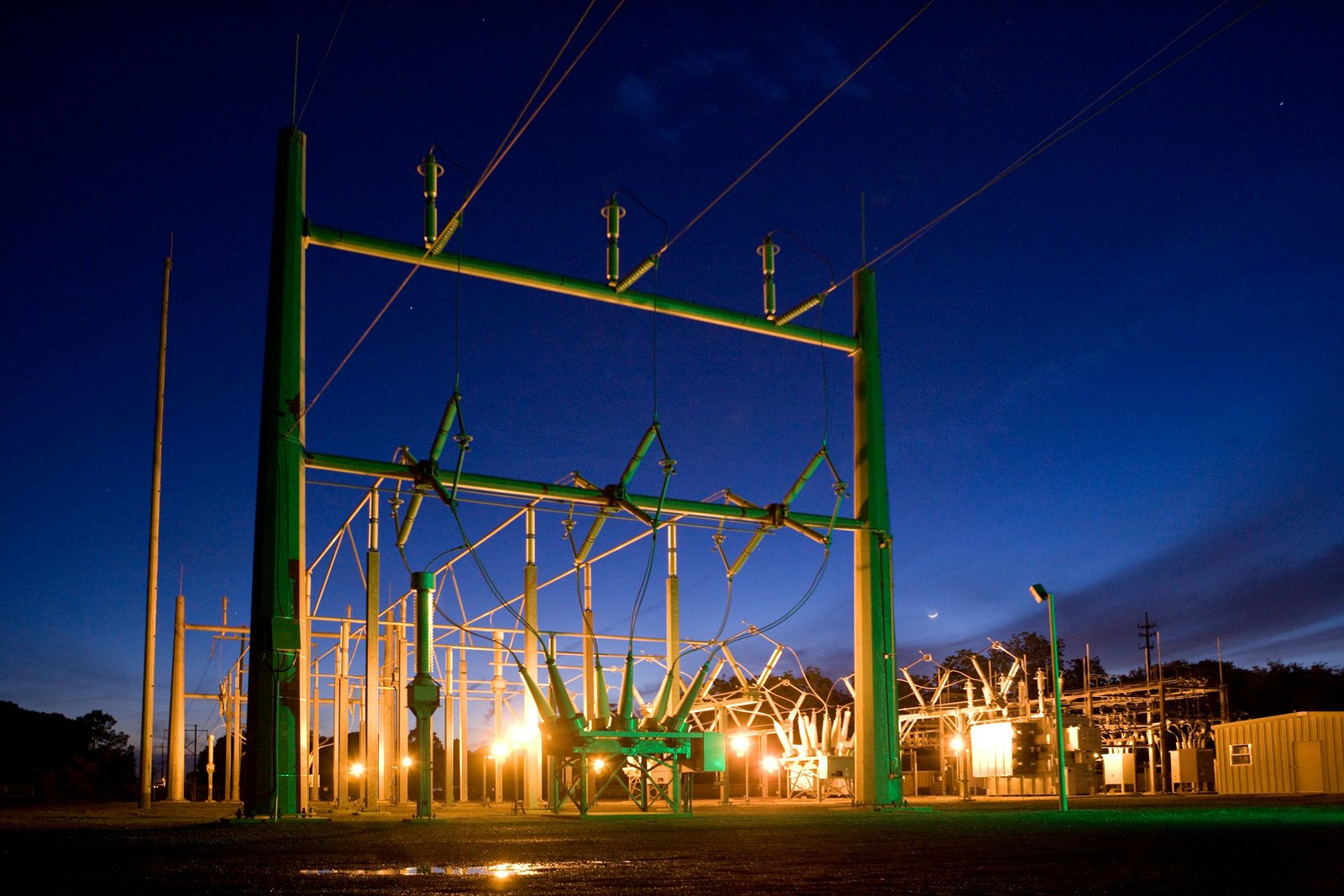
NN Inc. — the precision-components business that for most of the last decade has been talked about as "leveraged to the auto cycle" — raised full-year guidance on April 14 on the back of $43 million in new program awards specifically concentrated in the electric-grid and data-center component categories. That combination matters for a reason that goes beyond the usual pleasant-surprise guidance-raise: it is the first quarter in which the mix-shift thesis has produced dollar figures large enough to change the shape of the revenue model rather than merely supplement it.
For a company that has spent multiple years explaining to investors that precision-manufacturing capacity built for automotive transmission and steering systems is transferable into grid-hardware and data-center-infrastructure applications, producing the dollars that demonstrate the transfer is the entire game.
Why the mix shift is the thesis
Precision components is a fragmented, multi-end-market category. A company that makes precision bearings, rings, shafts, and related high-tolerance parts can in principle sell the same manufactured product, off the same tooling, into any end market willing to pay for the tolerances. The constraint is not manufacturing; it is sales channel, qualification cycles, and customer relationships. Automotive, for historical reasons, was the sales channel that dominated NN's top line. Grid hardware and data-center infrastructure — categories with dramatically different growth profiles and, critically, different capital-spending cycles — have been the strategic target for several years.
What the bar chart shows is the directional version of the mix-shift thesis. The automotive-as-dominant-end-market share is declining, both in absolute terms and as a share of the revenue base. The grid-and-data-center end markets are growing, and at a pace that — if sustained — meaningfully repositions the cyclical characteristics of the entire business over the next three years.
The guidance raise itself
The numeric guidance raise is modest in dollar terms but larger in what it implies about management's visibility. A guidance raise delivered on the back of $43 million in named, specific program awards is categorically different from a guidance raise driven by macroeconomic assumptions or end-market forecasts. The awards have specific customer identities, specific product identities, and specific delivery timelines; they are bookings, not forecasts. That pushes the information content of the raise closer to "confirmed" than "anticipated."
The snapshot
Why the grid and data-center end markets specifically
The investment case on both end markets as a category is well-known at this point: multi-year capital-spending acceleration driven by grid modernization, data-center buildout, and the compounding electricity demand from AI-compute and electrification. The less-discussed point is that the component supply chain into those end markets is not a new supply chain — it draws heavily on the same precision-manufacturing capabilities that have been serving automotive for decades. Switchgear, transformer components, bus-duct hardware, and data-center power-distribution infrastructure all require the kind of high-tolerance metalwork that NN's facilities can produce with their existing tooling.
That is the real insight behind the reposition: it is not a new business; it is the same business, sold into a faster-growing end market. The cost of moving the sales channel is primarily the time required for customer qualification, which in industrial categories typically runs 12 to 24 months from first quote to first production delivery. NN has been doing that work for several years. April is the first quarter where the result of it is plainly visible in the revenue mix.
Five things this changes
The honest risks
Two risks are worth flagging. First, the automotive end market is still more than half of the revenue base, which means an auto-production downturn still moves the consolidated print even with the mix shifting. Second, grid and data-center programs are typically lumpy — revenue is recognized against multi-year frame agreements with uneven delivery cadences, which introduces quarterly choppiness that is different in character from automotive's more regular rhythm. Neither is a thesis-breaker; both are reasons to watch the next two quarterly prints for consistency rather than expect a straight-line rerating.
What would confirm bullish
- A second consecutive quarter of grid/DC program wins in a similar dollar magnitude. One large quarter is a data point; two consecutive quarters is a pattern.
- Commentary from customers in the grid and data-center end markets — prime contractors, switchgear OEMs, or data-center operators — that specifically references NN as a preferred supplier.
- Margin profile on the new mix, as disclosed in the full 10-Q, at or above the automotive baseline. If the grid/DC work comes in at materially lower margins, some of the mix-shift thesis needs to be refactored.
The bottom line
NN Inc. is the rare small-cap industrials story where the multi-year strategic narrative produced a quarter that actually demonstrated the narrative was real. $43 million in specific, named program wins in grid and data center — categories the company has been telling investors would absorb its manufacturing capacity — is the proof point. Bullish on the twelve-month setup, with the understanding that the proof point has to repeat to support a durable rerating.
Disclosure
This piece is reporting and analysis, not investment advice. The MicroCap Desk editorial team holds no position in NNBR at time of publication. Staff members are prohibited from trading covered names for a defined window around publication. NN Inc. is not a sponsor of this publication, has not paid for this coverage, and has not been shown this article in advance of publication.
Figures cited reflect NN Inc.'s most recent public filings with the U.S. Securities and Exchange Commission and official company disclosures. Readers are encouraged to consult primary documents — 10-K, 10-Q, and 8-K filings — before making any investment decision. End-market exposure estimates are directional reads of disclosed segment data.