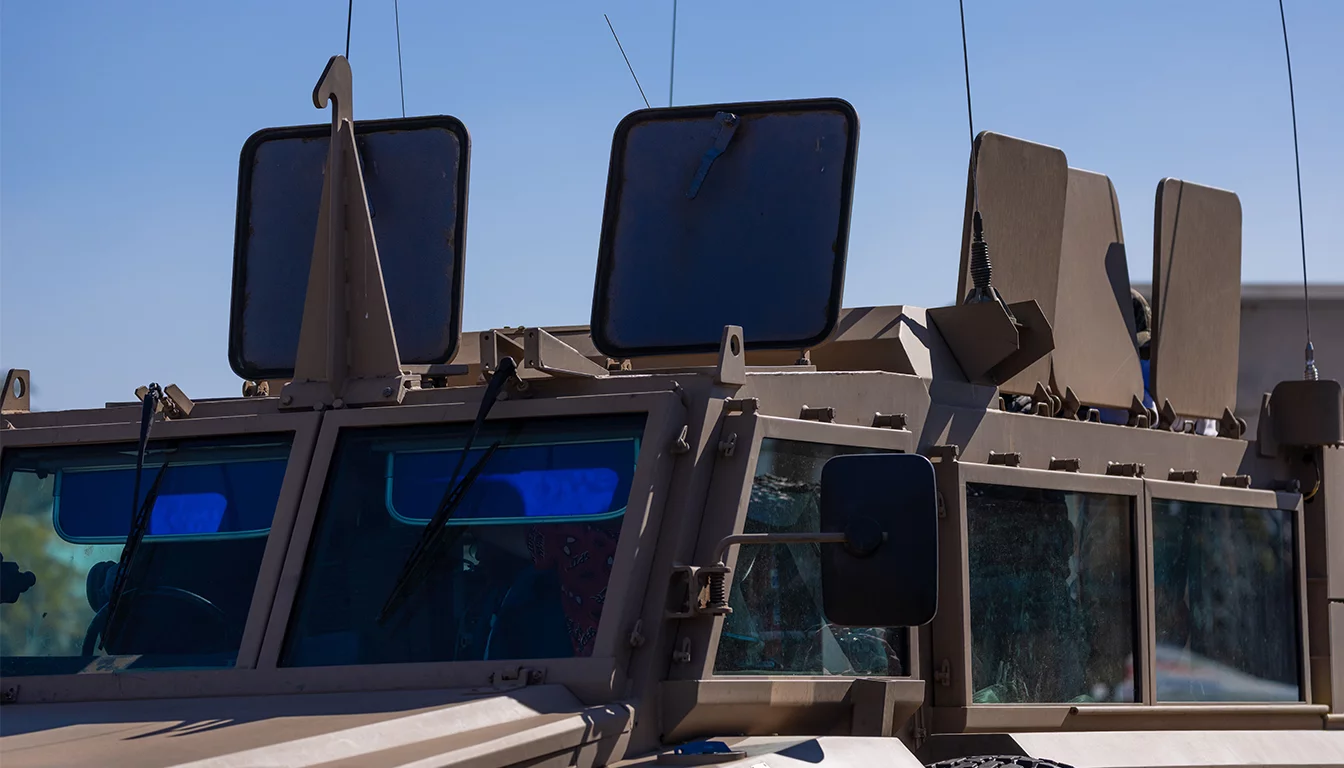
The supply of new names has meanwhile collapsed. Just 13 microcap companies listed on Nasdaq and the NYSE in 2026 through late July, raising under $300 million between them, against 80 in 2025, per Bloomberg data cited by Fast Company. Fewer entrants and stronger index performance mean the existing cohort is where the activity concentrates, which raises the premium on telling contracted revenue apart from announcements.
The five below sit in applied AI and edge infrastructure, not model development. None of them trains foundation models. Each sells something that runs AI workloads in a specific place: on a drone, in a rural data center, on a roadway, inside a defense platform. Each has a dated development within the last eight weeks.
Ordering: alphabetical by ticker. The order implies nothing about merit, quality, or prospects.
Price data as of: August 6, 2026 close, except Lantronix (August 7) and Rekor Systems (July 22), each stated in its own entry. All figures retrieved from stockanalysis.com on August 7, 2026.
Airship AI Holdings (NASDAQ: AISP)
Thesis: high-margin federal surveillance software, small enough that a single contract moves a quarter, priced as though the contracts have stopped coming.
Airship AI sells AI-driven video, sensor and data management systems, mostly to US government agencies and large commercial operators. Its Outpost AI edge hardware analyses video where the camera sits rather than shipping it to a data center, which matters for agencies facing bandwidth limits and chain-of-custody requirements.
Standout development: per the company's August 6, 2026 results release, second quarter net revenue was $4.12 million with gross profit of $3.09 million, a 75% gross margin, attributed in part to a higher mix of Airship-branded hardware and software. Operating loss was $1.49 million, including $951,000 of stock-based compensation and higher sales and research spending.
Key risk: the share price has fallen from a 52-week high of $7.20 to $1.935, and the company filed a $100 million mixed securities shelf registration on May 11, 2026. Against a $66.64 million market value, a shelf that size is a standing signal that management wants the option to raise. Revenue is also concentrated in federal contracts, where a procurement freeze does more damage than a lost commercial customer.
Duos Technologies Group (NASDAQ: DUOT)
Thesis: as of last week, a pure-play edge data center operator, with $111 million of contracted revenue and a balance sheet rebuilt to fund the buildout.
Duos builds and operates modular edge data centers, small facilities placed close to end users rather than in remote hyperscale campuses, through its Duos Edge AI subsidiary. On August 6, 2026 the company completed the sale of Duos Technologies, Inc., the legacy rail and logistics inspection business it was named after, to Sandbank Acosta, LLC. What remains is the data center business.
Standout development: per a July 16, 2026 release, Duos Edge AI signed a five-year, 10 megawatt colocation agreement with an investment-grade hyperscaler valued at $111 million in contracted revenue, expanding capacity at its Columbus, Georgia campus to 20 megawatts by the fourth quarter of 2026. A July 7, 2026 release added a further 2 megawatt deployment. The company joined the Russell 2000 on June 29, 2026.
Key risk: how the buildout is funded. Per a June 17, 2026 release, Duos closed a $55 million registered direct offering of 2,000,000 shares plus 3,800,000 pre-funded warrants at $9.50 per share or warrant. Separately, USD.AI announced on June 5, 2026 that it had provided $98.1 million of asset-backed debt financing supporting deployment of 2,304 NVIDIA B300 GPUs managed by Hydra Host. Equity issuance plus asset-backed leverage both dilute or encumber existing holders, and trailing twelve month revenue of $24.79 million sits against a net loss of $11.25 million. Second quarter results land August 13, 2026.
Lantronix (NASDAQ: LTRX)
Thesis: the onboard compute inside NDAA-compliant drones, sold into a defense budget line that is growing.
Lantronix makes edge compute and connectivity hardware and software for industrial and defense customers. NDAA-compliant means the product meets US statutory restrictions on Chinese components, a hard requirement in defense drone procurement and a genuine competitive barrier.
Standout development: per the company's May 6, 2026 fiscal third quarter release, revenue for the quarter ended March 31, 2026 was $30.2 million, with a GAAP loss per share of $0.03 against non-GAAP earnings per share of $0.04, and cash and equivalents of $23.5 million. Management raised its full-year drone revenue expectation to a range of $10 million to $14 million and cited 22% growth in the Embedded IoT Solutions portfolio. Fiscal fourth quarter guidance was $29 million to $33 million of revenue.
Key risk: drone revenue of $10 million to $14 million is a fraction of a business running above $120 million annually, so the narrative and the numbers are not yet aligned. The gap between the GAAP loss and the non-GAAP profit is the item to read, and the reconciliation sits in the same release. Fiscal fourth quarter results, for the period ended June 30, 2026, were not yet reported at the time of writing.
One Stop Systems (NASDAQ: OSS)
Thesis: rugged computers running AI models where an ordinary server would not survive, with the order book converting faster than the income statement suggests.
OSS designs high-performance compute and storage built to operate under vibration, temperature extremes and shock: aircraft, military vehicles, autonomous mining and construction equipment. Following the December 2025 sale of its Bressner subsidiary for $22.4 million, it is a pure-play rugged edge compute business.
Standout development: per the August 5, 2026 results release, second quarter revenue from continuing operations was $9.35 million, up 62.3% year over year, with record bookings of $15.1 million and full-year guidance raised to 25% to 30% revenue growth. Earlier orders included an $8.4 million contract from a defense and technology solutions company on June 16, 2026, for 91 servers on a platform the company estimates at approximately $44 million of potential value, and a $2.2 million initial production order from an autonomous construction and mining equipment manufacturer on July 21, 2026.
Key risk: the GAAP net loss from continuing operations widened to $7.3 million, or $0.29 per share, from $2.5 million, or $0.11 per share, a year earlier, while the non-GAAP figure was a loss of one cent. That gap runs to roughly $7 million in a quarter with $9.35 million of revenue, and the reconciliation in the release is where it is settled. Gross margin also fell to 39.1% from 41.3%. The 52-week range of $4.17 to $20.88 shows how fast this one reprices.
A small-cap, not a microcap. OSS at $329.92 million sits inside our $500 million coverage ceiling but above $300 million, which makes it a small-cap by the standard FINRA and SEC definition rather than a microcap. We cover the band because sell-side research largely does not.
Rekor Systems (NASDAQ: REKR)
Thesis: the market has stopped paying for the story and started waiting for the profit, which management says arrives this half.
Rekor builds AI-powered vehicle and license plate recognition and roadway intelligence systems for transportation agencies, law enforcement and commercial operators.
Standout development: per a July 15, 2026 preliminary release, Rekor expects second quarter revenue of approximately $12.6 million, up about 22% sequentially, an adjusted gross margin near 55%, and an adjusted EBITDA loss of about $1.3 million, narrowed 78% year over year, with roughly $10 million of cash at quarter end. The company cut headcount 20% and consolidated overseas engineering, previously estimated to reduce annual operating expenses by about $7.5 million. Management expects adjusted EBITDA profitability in the second half of 2026. Adjusted EBITDA is a non-GAAP measure: on a GAAP trailing twelve month basis Rekor lost $29.95 million on revenue of $49.52 million, and full results arrive August 11, 2026.
Key risk: dilution and leverage together. Shares outstanding stand at 137.61 million, up 35.68% over one year and 6.80% over one quarter. Cash of $12.18 million sits against total debt of $29.42 million, a net cash position of negative $17.25 million, and working capital of negative $3.73 million. Short interest is 11.86% of shares outstanding. The share price fell 54.44% over the trailing 52 weeks.
How to research names like these
Start with liquidity, not the story. Multiply average daily share volume by the share price to get average daily dollar volume. Below roughly $100,000 a day, a position of any size cannot be exited without moving the price against you. Run this screen first, because it disqualifies names regardless of how good the underlying business is.
Then check the share count, not the share price. Pull the diluted share count from the cover page of the last four quarterly filings and compare. Rekor's 35.68% increase over a year is the number that explains how a business with improving margins can still deliver a falling share price. A company can execute well and leave holders worse off if the denominator grows faster than the business.
Then compute the runway yourself. Take cash and equivalents from the balance sheet, divide by net cash used in operating activities from the cash flow statement, and convert to a monthly figure. Compare your answer against any runway statement management has made. Where the two differ, the difference is an assumption, and it is worth knowing what it is. A shelf registration already on file, like Airship AI's $100 million mixed shelf, tells you how a raise would be executed if one becomes necessary.
Separate contracted revenue from announced revenue. A five-year agreement valued at $111 million of contracted revenue and a "seven figure follow-on award" are different kinds of statement. The first carries a schedule. The second may not. On every announcement, ask whether the release names a counterparty, a dollar figure, and a delivery period. Announcements missing all three are pipeline, not revenue.
Read the non-GAAP reconciliation, not the non-GAAP headline. Adjusted figures exclude items management has decided are unrepresentative. Sometimes that is fair. Sometimes it excludes stock-based compensation, which is a real and recurring cost of employing people. When a company reports a $0.29 GAAP loss and a $0.01 non-GAAP loss in the same quarter, the reconciliation is the document that explains the other $0.28.
This is a watchlist, not a set of recommendations, and it is not ranked. Verify every figure against current filings and live market data before acting on any of it.
Disclosure
This article is independent editorial content and reflects the author's opinion and analysis as of the date of publication. It is not investment advice and should not be relied on as the basis for any investment decision. MicroCap Desk and its contributors received no compensation of any kind — cash, securities, or otherwise — from any company mentioned, or from any third party, in connection with this article. The author holds no position in any security mentioned. Information is drawn from sources believed reliable but is not guaranteed accurate or complete. Microcap securities carry a high risk of loss. Do your own research. See our full Disclosure.