
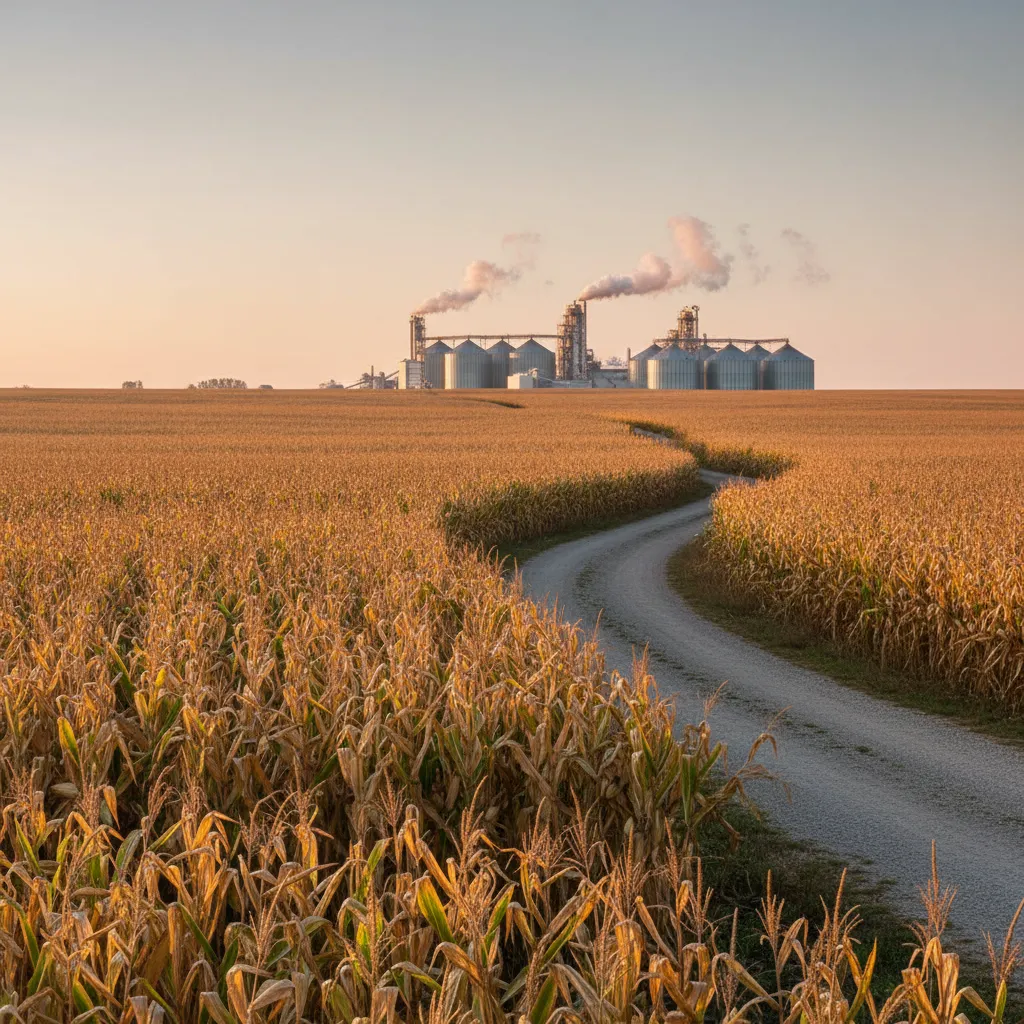
The cooperative structure in plain terms
A traditional agricultural cooperative is owned by the farmers who supply the raw commodity. Members deliver corn — either physically or through a delivery-rights mechanism — and the cooperative processes the corn or arranges for its processing under joint-venture arrangements. The economic returns of the processing operation flow back to members in proportion to their patronage, which is usually measured in bushels delivered or delivery units owned.
Several features distinguish this structure from a conventional public company. Membership ownership is concentrated among working farmers and family operations, not anonymous public-market investors. That changes how the entity makes long-term capital allocation decisions. Distributions to members are typically taxed at the individual level rather than at both the entity and individual level, which is one of the structural reasons cooperatives have persisted in agricultural value chains for more than a century. And the cooperative’s strategic objective is to maximize value back to members, which can include guaranteed offtake at attractive prices, patronage distributions, and long-term price stability — not purely to maximize stock-price appreciation.
Corn wet milling and what it produces
The downstream processing pathway most relevant to a corn cooperative is wet milling. Wet milling separates a kernel of corn into its component parts — starch, gluten, fiber, and germ — through a process of steeping, grinding, and centrifugation. The starch fraction is the most economically important output and feeds into three major end-product categories.
The first is sweeteners. High fructose corn syrup and dextrose syrups go into beverages, baked goods, dairy, and processed foods. The HFCS market in the United States is mature but still substantial, and producers compete on cost, logistics, and customer relationships rather than on product differentiation.
The second is industrial starches. Modified and unmodified starches are used in paper manufacturing, textile sizing, adhesives, pharmaceutical excipients, and biodegradable plastics. This is a smaller-volume but higher-margin segment with more pricing power than commodity sweeteners.
The third is fermentation feedstock. Wet-milled starch can be hydrolyzed and fed into industrial fermentation processes that produce ethanol, lysine, citric acid, lactic acid, and a growing list of bio-based chemicals. As fossil-based chemistry faces pressure on cost and emissions grounds, the addressable market for fermentation-derived alternatives has expanded.
Co-products from wet milling — corn gluten meal, corn gluten feed, and corn oil — feed into animal nutrition and edible-oil markets. These co-product streams are economically significant; in some periods, co-product margins effectively underwrite the primary product economics.
What drives member income year to year
For a corn cooperative member, income from the cooperative is influenced by a layered set of variables. The first layer is the underlying corn price relative to the cooperative’s effective sourcing arrangements. Cooperatives often have offtake or delivery arrangements that buffer member income from short-term spot price moves.
The second layer is the processing margin — the spread between the cost of corn delivered to the plant and the realized value of the products sold. That margin moves with energy costs (steam and electricity are major inputs to wet milling), with end-product demand, and with co-product pricing.
The third layer is the cooperative’s operating efficiency, including plant utilization, maintenance costs, and any joint-venture arrangements that share margin upside or downside with processing partners.
The fourth layer is capital structure. Member income is generally a function of patronage distributions, which depend on the cooperative’s profitability and on the board’s decisions about retaining earnings for capital projects versus distributing them.
How members and investors typically evaluate performance
For evaluating cooperative performance, the most useful metrics tend to be patronage distribution per unit (per bushel or per delivery right) trailing several years to smooth out cyclical variation, the realized price differential between cooperative members and the open spot market, and the cooperative’s balance sheet position — particularly the level of long-term debt relative to processing capacity.
Investors evaluating cooperative-related securities also look at the structural alignment between the cooperative’s interests and member interests, the term of any joint-venture arrangements with processing partners, and the diversification of end-product exposure across sweeteners, industrial starches, and fermentation feedstocks.
The longer-term picture
Three forces shape the longer-term outlook for a corn-based cooperative model.
Demand for sweeteners is broadly mature in developed markets and growing modestly in emerging markets, with offsetting headwinds from consumer preference shifts toward lower-sugar formulations. Demand for industrial starches and bio-based fermentation feedstocks is growing as substitution from fossil-based inputs continues across packaging, plastics, and specialty chemicals. Corn supply economics continue to be shaped by yield trends, crop insurance programs, and ethanol blending mandates — all of which have second-order effects on the spread between corn input cost and processed-product revenue.
A member-owned cooperative that has positioned itself within an established wet-milling joint venture is, in essence, a structured exposure to the corn-to-industrial-product value chain — without the operational risk of running the processing plant directly. That exposure has its own cyclicality, but it offers a different income profile than either holding corn outright or owning shares in a conventional integrated processor.
For members and prospective investors, the practical question is not whether the cooperative model is better or worse than alternatives — it is whether the specific structure delivers a more predictable share of downstream value back to the farmer-member than other available channels for marketing the same bushel of corn.
All coverage Golden Growers CooperativeGGRODisclosure
This article is independent editorial content and reflects the author's opinion and analysis as of the date of publication. It is not investment advice and should not be relied on as the basis for any investment decision. MicroCap Desk and its contributors received no compensation of any kind — cash, securities, or otherwise — from any company mentioned, or from any third party, in connection with this article. The author holds no position in any security mentioned. Information is drawn from sources believed reliable but is not guaranteed accurate or complete. Microcap securities carry a high risk of loss. Do your own research. See our full Disclosure.