
Why industrial heat is the harder problem
Roughly one-fifth to one-quarter of global energy-related carbon dioxide emissions come from industrial processes. Of those industrial emissions, the majority are tied to heat — specifically, the high-temperature heat used to make cement, steel, glass, ceramics, chemicals, paper, and processed food. The temperatures involved range from a few hundred degrees Celsius for low-grade applications like food processing to well over 1,400 degrees Celsius for cement clinker production and metallurgical applications.
Heat at these temperatures has historically been supplied by burning fossil fuels — natural gas, coal, petroleum coke, and oil — directly inside furnaces, kilns, and boilers. The reasons for this are not arbitrary. Fossil fuels combust at very high temperatures, transfer heat efficiently to the process, and have been available at relatively low and stable prices for decades.
Replacing that heat source is technically much harder than replacing fossil fuels in electricity generation. Electricity decarbonization has the advantage of being a system-level swap — replace coal-fired generation with wind, solar, and gas, and the rest of the grid can largely be left alone. Industrial heat does not work that way. Each industrial site has its own process requirements, equipment, and integration constraints. A new heat source must deliver the right temperature, the right thermal profile, the right reliability, and the right cost — usually all at once.
The options on the table
Several technology pathways are being pursued to decarbonize industrial heat.
Electrification — using electricity, ideally from renewable sources, to generate process heat — works well for lower temperature applications but becomes economically and technically difficult above roughly 400 to 500 degrees Celsius, depending on the specific use case. Industrial-scale electric furnaces exist for some applications, particularly in steel and glass, but the cost penalty relative to fossil fuels remains substantial in many cases.
Hydrogen combustion offers high-temperature potential, but the cost of green hydrogen — produced via electrolysis from renewable electricity — is still well above the cost of natural gas in most regions. Hydrogen also requires significant infrastructure investment for production, storage, and distribution.
Carbon capture and storage retrofits the existing fossil-fueled process equipment and traps the resulting carbon dioxide. This is technically feasible but expensive on a per-tonne basis, and the captured CO₂ has to go somewhere — either into permanent geological storage or into a downstream use case.
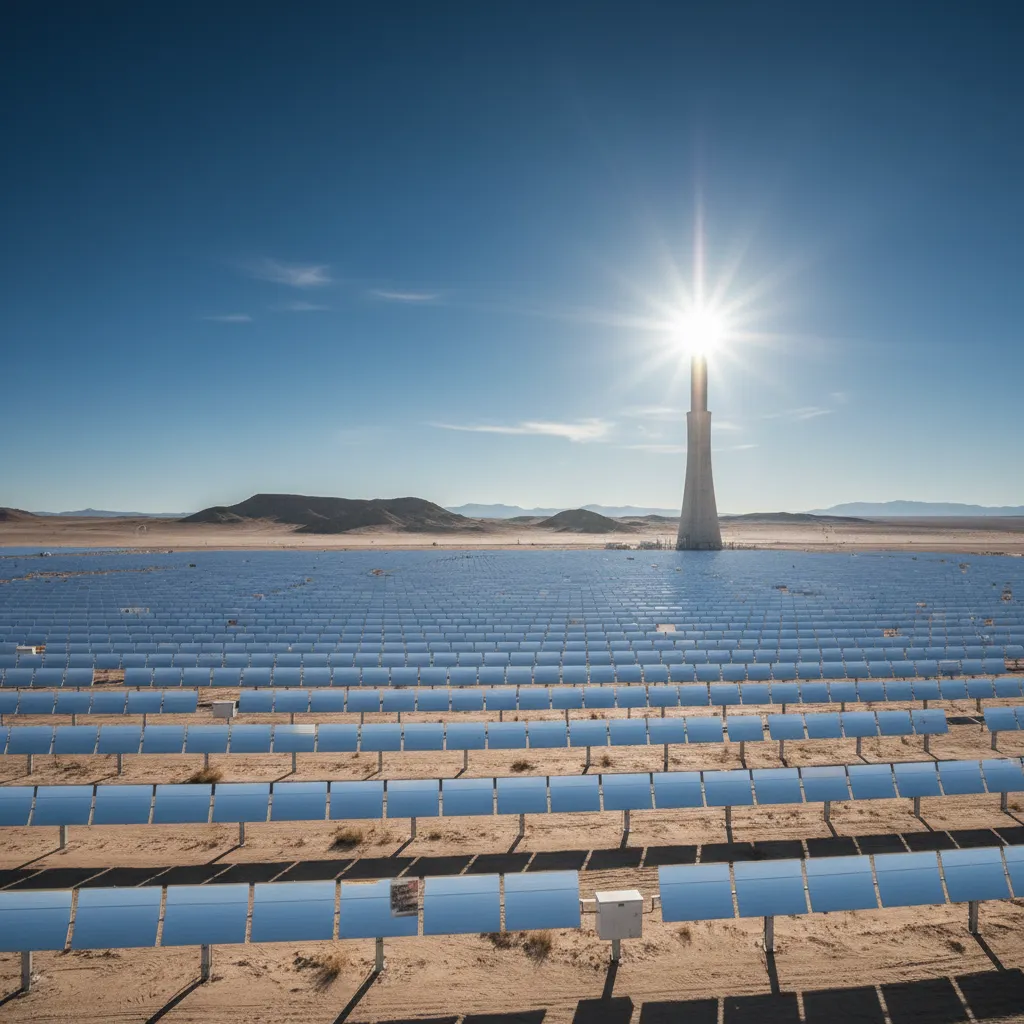
Concentrated solar thermal uses arrays of mirrors to focus sunlight onto a central receiver, producing heat directly at temperatures that can reach well into the range needed for many industrial applications. This pathway is conceptually attractive because it converts a free input — sunlight — directly into the form of energy that the process actually needs. The trade-offs are siting (it works only where solar resources are strong), the capital intensity of building the mirror field and tower, and the need for thermal storage or hybridization to handle non-daylight hours.
Each of these pathways has a different cost curve, a different geographic footprint, and a different set of industrial applications where it makes sense.
Why concentrated solar thermal deserves more attention
Among the high-temperature decarbonization options, concentrated solar thermal is one of the few that can deliver process heat in the right temperature range without first converting energy to electricity and then back to heat. That round-trip avoidance matters because every energy conversion introduces losses. A heat-to-heat pathway is fundamentally more efficient for industrial applications than an electricity-to-heat pathway for the same end use.
Concentrated solar thermal also pairs naturally with thermal energy storage. Heat stored in molten salt or solid media can be drawn down during cloud cover or after sundown, allowing the system to deliver more consistent process heat than intermittent renewable electricity can without battery storage.
The catch is that concentrated solar systems require significant land area, strong direct-normal solar resources, and substantial upfront capital. Like most renewable energy categories, the economic question is less about whether the underlying physics work — they do — and more about whether the levelized cost of delivered heat is competitive with fossil alternatives at the relevant industrial site.
What investors should think about
Investors evaluating industrial-heat decarbonization opportunities should pay attention to several things.
The first is the specific end-use being targeted. An application like cement production has very different requirements from a food processing facility. A technology that works well in one context may not transfer easily to another.
The second is the customer profile. Industrial heat customers are typically large, capital-disciplined buyers with long evaluation cycles. Pilot projects and initial commercial deployments are leading indicators that matter more than technology readiness on paper.
The third is the policy backdrop. Carbon pricing — whether through direct regulation, emissions trading schemes, or border carbon adjustments — materially shifts the economic case for high-temperature decarbonization. The European Union’s carbon border adjustment mechanism, in particular, is a structural tailwind for low-carbon industrial heat in industries that export to Europe.
The fourth is the financing structure. Large industrial heat projects are often delivered under build-own-operate or heat-as-a-service contracts that reduce the customer’s upfront capital requirement. The economics of such structures depend heavily on the credit profile of the offtaker and the duration of the contract.
The frontier matters
The reason this category deserves attention is straightforward. Industrial heat is the single largest source of energy-related industrial emissions that has not yet been substantially addressed by any deployed-at-scale technology. The companies that figure out how to deliver clean process heat at commercially competitive cost stand at the entrance to a multi-decade market that is currently served almost entirely by fossil fuels.
That is not a story about the next quarter. It is a story about a structural transition that is being shaped right now by pilot projects, early commercial deployments, and the policy frameworks that will determine which technologies cross the threshold from demonstration to mainstream.
Disclosure
This article is independent editorial content and reflects the author's opinion and analysis as of the date of publication. It is not investment advice and should not be relied on as the basis for any investment decision. MicroCap Desk and its contributors received no compensation of any kind — cash, securities, or otherwise — from any company mentioned, or from any third party, in connection with this article. The author holds no position in any security mentioned. Information is drawn from sources believed reliable but is not guaranteed accurate or complete. Microcap securities carry a high risk of loss. Do your own research. See our full Disclosure.