
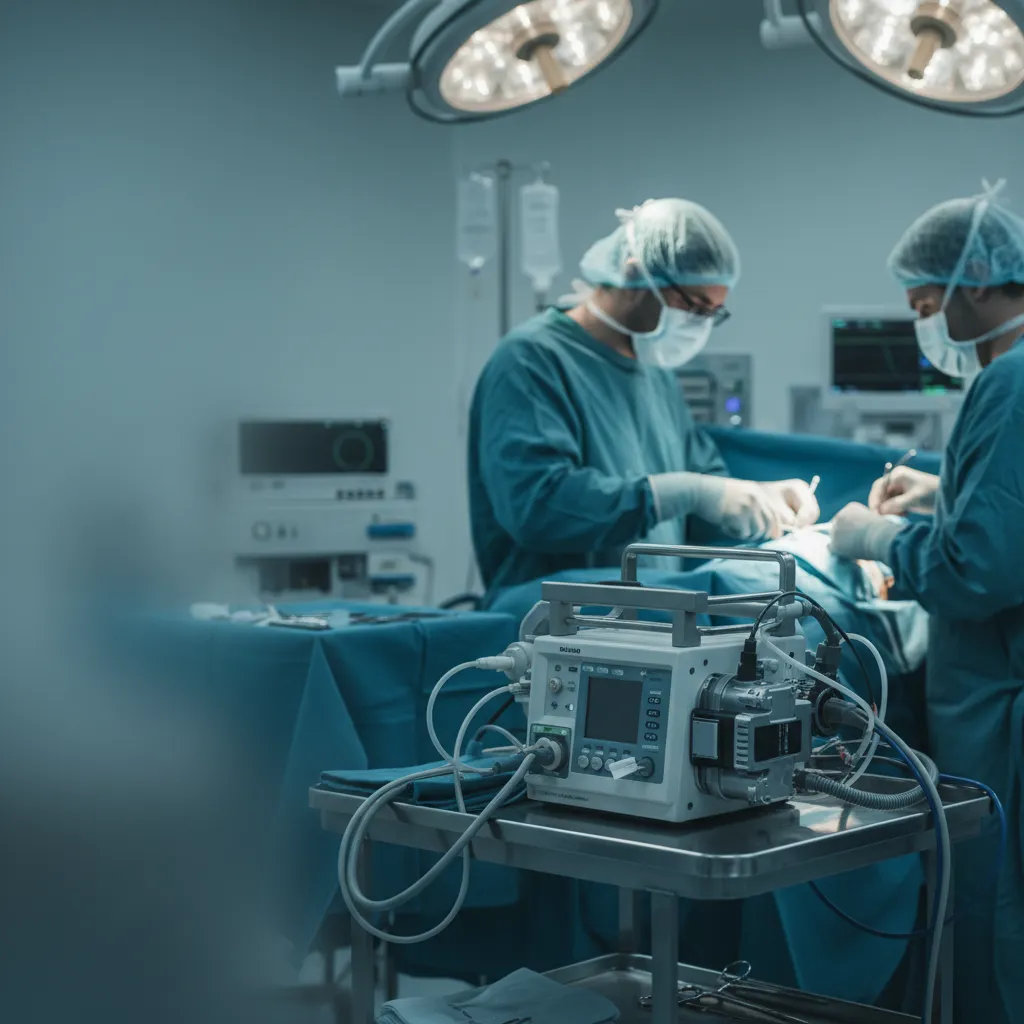
Within mechanical circulatory support, the total artificial heart occupies a particular position — sometimes overlooked in favor of left ventricular assist devices, but irreplaceable for a specific patient population.
The clinical problem in numbers
The United States performs roughly 3,500 to 4,000 heart transplants per year. The wait list at any given time typically includes thousands of patients, many of whom will not survive until a suitable donor becomes available. The waiting time depends on blood type, body size, geographic region, and the severity of the patient’s illness as determined by listing-status criteria.
For patients with the most advanced biventricular heart failure — failure of both the left and right sides of the heart simultaneously — the clinical options are limited. A left ventricular assist device (LVAD) supports only the left side. Right-sided support adds complexity, and in many cases the surgical and physiological challenges of biventricular mechanical support exceed what an LVAD-plus-RVAD combination can reliably provide.
For these patients, removal of both native ventricles and replacement with a total artificial heart can be the bridge that keeps them alive long enough to reach transplant.
What a total artificial heart actually does
A total artificial heart is a mechanical device that completely replaces the patient’s native ventricles. Both right and left ventricles are excised surgically, and the artificial heart is implanted in their place. The device pumps blood into the pulmonary and systemic circulations the way the native heart does, although the physiology differs in subtle but clinically important ways.
The current commercial total artificial heart technology has been deployed in thousands of patients globally and remains the only FDA-approved device of its kind for biventricular failure as a bridge to transplant.
The patient lives with the artificial heart for as long as needed — sometimes months, occasionally years — until a donor heart becomes available and the transplant can be performed.
Why the category gets less attention than it should
Mechanical circulatory support is a smaller, more specialized medical device segment than the high-profile categories of cardiology — stents, transcatheter valves, electrophysiology, and structural heart procedures. Total artificial hearts in particular serve a small subset of the broader heart failure population. The combination of a small patient pool, complex surgical implantation, and intensive post-operative management means the category is treated by a relatively small number of highly specialized centers.
That specialization is precisely why the category is underappreciated. The clinical need is unambiguous. The therapeutic alternative for a patient with biventricular failure is, in many cases, death on the transplant waiting list. The economic value created by a successful bridge to transplant is substantial — both for the patient and for the healthcare system, which avoids the much higher costs of repeated hospitalizations, advanced life support, and unsuccessful attempts at less complete forms of mechanical support.
The broader mechanical circulatory support landscape
Mechanical circulatory support has evolved substantially over the past two decades. LVADs, the most widely used form of mechanical circulatory support, have moved from bulky, first-generation pulsatile devices to compact, continuous-flow pumps that allow many patients to leave the hospital and live at home for extended periods. The technology has matured to the point where LVAD therapy is considered a viable option not just as a bridge to transplant but, in some patients, as destination therapy — a long-term solution for patients ineligible for transplant.
The total artificial heart segment has evolved more slowly. The fundamental challenge is that replacing both ventricles is a substantially more complex surgical and physiological intervention than supporting the left ventricle alone. Improvements in materials, control systems, and patient management have continued, but the device remains specialized.
Several next-generation device platforms — including next-generation total artificial heart designs from various developers — are in development globally. Whether any of these displace existing technology depends on demonstrated clinical performance, regulatory approval pathways, and reimbursement structure.
Reimbursement and the economics of bridge-to-transplant therapy
Mechanical circulatory support therapy in the bridge-to-transplant setting is reimbursed under specific Medicare DRG codes in the United States and under analogous systems in other developed markets. The reimbursement rates are substantial because the cost of the implantation procedure, the device itself, the inpatient stay, and the subsequent transplant procedure together represent one of the higher-cost episodes of care in modern medicine.
For investors evaluating companies in this category, the reimbursement environment is a key factor. Coverage policies, prior authorization requirements, and the ability of implanting centers to manage the full episode of care all shape the volume of device implants performed in a given year.
A second key factor is the network of implanting centers. Total artificial heart implantation is performed at a relatively small number of high-volume cardiac surgery programs. Expanding the network — through training, credentialing, and clinical support — is a slow, relationship-driven process. The companies that have built deep relationships with high-volume centers have a competitive position that is difficult to replicate quickly.
What investors should think about
For investors looking at the mechanical circulatory support category in general and the total artificial heart segment specifically, a small number of variables tend to drive the longer-term picture.
The number of implants performed per year, broken down by indication (bridge to transplant, bridge to candidacy, destination therapy) gives the clearest view of category demand.
The regulatory pathway for any next-generation devices — including premarket approval studies, FDA interactions, and international regulatory submissions — is a major determinant of when new entrants reach the market.
The clinical evidence base supporting expanded indications matters. Each indication that becomes reimbursable expands the addressable patient population.
The relationship between mechanical circulatory support and transplant supply is a longer-term consideration. Innovations in donor preservation, donor heart utilization, and xenotransplantation could shift the picture in either direction.
The total artificial heart is one of the most technically and clinically demanding categories in cardiovascular medicine. For the patients who need it, there is no substitute. For the companies that develop and commercialize it, the addressable market is small but the per-patient value is substantial, the competitive moat is real, and the longer-term opportunity in expanded indications and next-generation devices remains open.
All coverage Picard MedicalPCMDDisclosure
This article is independent editorial content and reflects the author's opinion and analysis as of the date of publication. It is not investment advice and should not be relied on as the basis for any investment decision. MicroCap Desk and its contributors received no compensation of any kind — cash, securities, or otherwise — from any company mentioned, or from any third party, in connection with this article. The author holds no position in any security mentioned. Information is drawn from sources believed reliable but is not guaranteed accurate or complete. Microcap securities carry a high risk of loss. Do your own research. See our full Disclosure.