The macro setup
Three facts define uranium in 2026, and they compound rather than merely coexist.
Long-term contract prices reached an all-time high of approximately $97 per pound, driven by a widening structural supply gap and demand from AI data centers. The long-term price matters more than the spot price in this market, because utilities buy fuel years ahead under contract rather than on the open market, so it reflects what buyers will commit to rather than what is trading today.
Supply is contracting at the source. Kazatomprom, which accounts for more than 40% of global primary uranium production, cut its 2026 guidance by approximately 10%, to between 27,500 and 29,000 tonnes of uranium, citing market conditions it did not view as sufficient to justify a return to full capacity. When the largest producer declines to produce more into a rising price, that is a statement about its own cost structure and its view of durable demand.
Demand has acquired a new source. Nuclear generation is being contracted directly by data center operators, a buyer class that did not exist in this market three years ago and that is not price-sensitive in the way a regulated utility is. The International Energy Agency projects global nuclear capacity more than doubling from 417 GW in 2022 to 916 GW by 2050 under its net-zero scenario, requiring average annual investment above $100 billion, roughly triple recent levels.
Why microcaps specifically, and why there are so few left
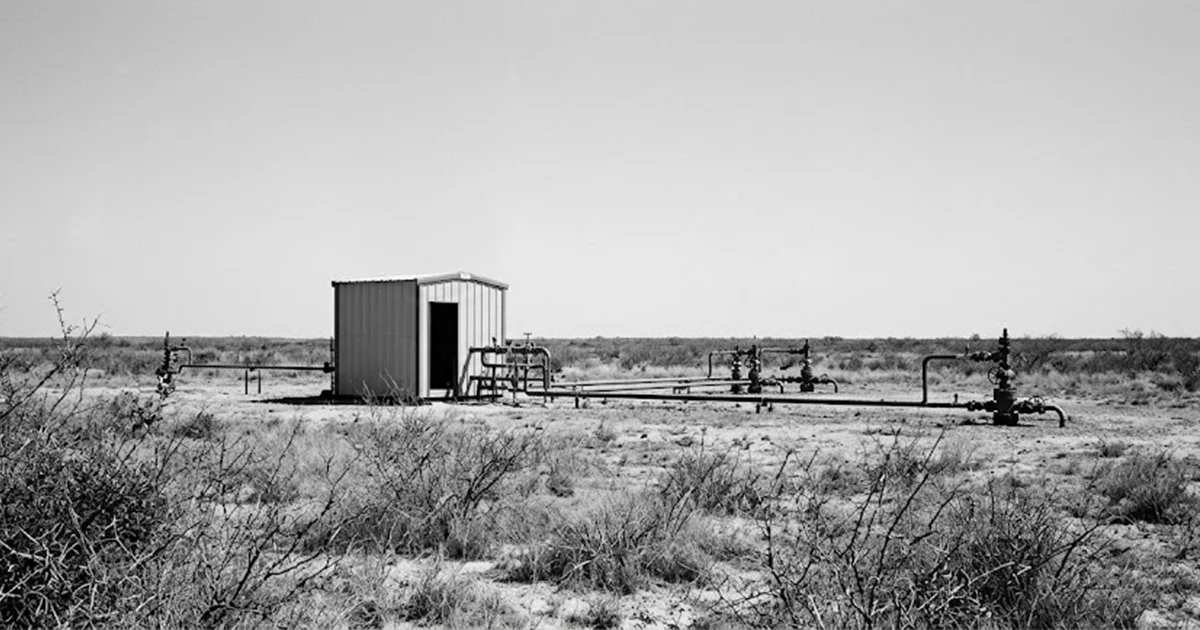
Where small companies have a structural edge. Uranium development is a permitting and licensing business before it is a mining business, and licenses attach to specific deposits rather than to balance sheets. In-situ recovery, the technique that dominates US production, dissolves uranium underground and pumps it to the surface rather than digging it out, which lowers both capital cost and environmental disturbance. That makes a genuinely small operator viable in a way it would not be in conventional hard-rock mining.
Where they are structurally disadvantaged, and this is the decisive one. Development timelines outlast the patience of the capital that funds them. A deposit takes years to permit and years more to build, while the equity funding that construction has to be raised repeatedly along the way. Every raise dilutes. A company can be entirely correct about uranium and still deliver a poor outcome per share, because the share count grew faster than the asset advanced.
And the band itself has emptied. Of 68 publicly traded nuclear power companies tracked as of September 2, 2026, uranium miners are the largest group by number at 24 of the 68, yet account for under 6% of combined market capitalization. The sector is a handful of large producers alongside many small explorers, most of which are listed in Canada rather than the United States and therefore fall outside a US-listed screen entirely.
The landscape
The companies below are illustrative of where the sector sits relative to a $500 million coverage ceiling. They are not endorsements, not recommendations, and not a screened watchlist. Market capitalizations are stated with their dates.
Inside the band:
- Lightbridge Corporation (NASDAQ: LTBR), $289.65M. Metallic nuclear fuel developer, Reston, Virginia. Pre-revenue. Holds cash reserves of $237.5 million against no debt per second quarter results released August 6, 2026, meaning roughly 82% of the market value is the balance sheet. Shares outstanding rose 72.75% over one year to 35.23 million. Thirteen employees. Received a Japan Patent Office notice of allowance on September 1, 2026.
- enCore Energy (NASDAQ: EU), $232.81M. The only US uranium producer with multiple active in-situ recovery facilities, operating central processing plants and wellfields in South Texas, with a licensed South Dakota project authorized to begin construction. Trailing revenue of $55.25 million, meaning it is the only name here actually selling uranium. Received a positive Nuclear Regulatory Commission decision and Bureau of Land Management construction authorization for its Dewey Burdock project. Shares rose 14.83% on September 8, 2026 to $1.20.
Outside it:
- Uranium Royalty Corp (NASDAQ: UROY), approximately $1.71B. Royalty and streaming interests plus physical uranium held as an investment. The only royalty model in the small-cap uranium universe.
- Cameco and NexGen Energy. Between them these two account for roughly 75% of the total market capitalization of US-listed uranium companies. Included here only as the ceiling against which everything else is measured.
That distribution is the finding. A screen of US-listed uranium and nuclear names between $50 million and $500 million returns a short list, and the two names on it sit at opposite ends of the business model: one holds cash and patents with no product, the other is producing and selling uranium at a market value under a quarter of a billion dollars. Everything larger has been repriced out of the band by the same commodity move that made the sector interesting.
The obvious question about enCore is why an operating producer with $55.25 million of trailing revenue carries a market value of $232.81 million in a year when uranium contract prices set a record. That is the question worth taking to the filings rather than answering from a screen.
Risks unique to microcaps in this sector
- Dilution runs faster than development. Lightbridge's 72.75% share count increase in a single year is the pattern rather than the exception. Track shares outstanding across four quarters before reading any milestone announcement, because the milestone and the ownership move independently.
- A commodity price is not a revenue line. A record contract price benefits companies selling pounds under contract. It does nothing immediate for a developer years from production or a fuel technology company with no product. The sector rallies together and the cash flows do not.
- Licensing timelines are measured in years and are not fully controllable. Nuclear Regulatory Commission decisions, state permits and federal land authorizations each carry their own calendar, and a schedule published by a company is a forecast of an agency's behaviour.
- Sentiment moves these prices more than disclosure does. Elevated short interest and high beta make small nuclear names react to the commodity tape rather than to filings. Lightbridge carries short interest at 12.31% of shares outstanding and a beta of 2.11.
- Policy is an input that can reverse. Government support for domestic nuclear fuel supply currently underwrites much of the sector's valuation. That support has a political cycle attached to it.
What would change the picture
- Kazatomprom returning to full capacity. The largest producer restoring output would compress the supply gap that underpins the price.
- A name re-entering the band. Companies leave the microcap universe on enthusiasm and return on disappointment. A round trip by any of the names above would be the sector's honest verdict on itself.
- Data center contracting converting into fuel demand. Announced nuclear power agreements with data center operators are power purchase commitments. Watch for the fuel contracts that would have to follow.
- Irradiation and qualification data on advanced fuels. The fuel technology companies inside the band are valued on designs that no utility has yet loaded into a reactor. Test data is the first real evidence.
- New US listings. Canadian-listed explorers uplisting to a US exchange would repopulate the band. Nothing else obviously will.
Disclosure
This article is independent editorial content and reflects the author's opinion and analysis as of the date of publication. It is not investment advice and should not be relied on as the basis for any investment decision. MicroCap Desk and its contributors received no compensation of any kind — cash, securities, or otherwise — from any company mentioned, or from any third party, in connection with this article. The author holds no position in any security mentioned. Information is drawn from sources believed reliable but is not guaranteed accurate or complete. Microcap securities carry a high risk of loss. Do your own research. See our full Disclosure.