Why this matters now
On September 1, 2026, Lightbridge Corporation (NASDAQ: LTBR) announced it had received a notice of allowance from the Japan Patent Office for Japanese Patent Application No. 2024-513980, titled "Multi-Zone Fuel Element." A notice of allowance means the patent office has agreed to grant the patent, subject to procedural steps. It is intellectual property protection in a major nuclear market, and it is not revenue.
That distinction runs through everything about this company, and it is why the balance sheet is more interesting than the announcement. Per second quarter results released August 6, 2026, cash reserves increased to $237.5 million, with higher research and general expenses driving a net loss of $12.1 million for the first half of 2026.
Set $237.5 million of cash against a $289.65 million market capitalization at the September 8, 2026 close of $8.22. Roughly 82% of the company's market value is money in the bank. Strip the cash out and the market is assigning something in the region of $50 million to two decades of nuclear fuel research, a granted patent portfolio across major nuclear jurisdictions, and a testing partnership with Idaho National Laboratory.
The uranium and nuclear backdrop explains the timing. Long-term uranium contract prices reached a record of approximately $97 per pound, driven by a widening structural supply gap and demand from AI data centers. Kazatomprom, which accounts for more than 40% of global primary uranium output, cut its 2026 production guidance by roughly 10%. Capital has moved toward anything nuclear, and Lightbridge's shares rose 41.69% over the trailing 52 weeks.
What the company does
Lightbridge develops nuclear fuel. Not reactors, not power plants: the fuel that goes inside them.
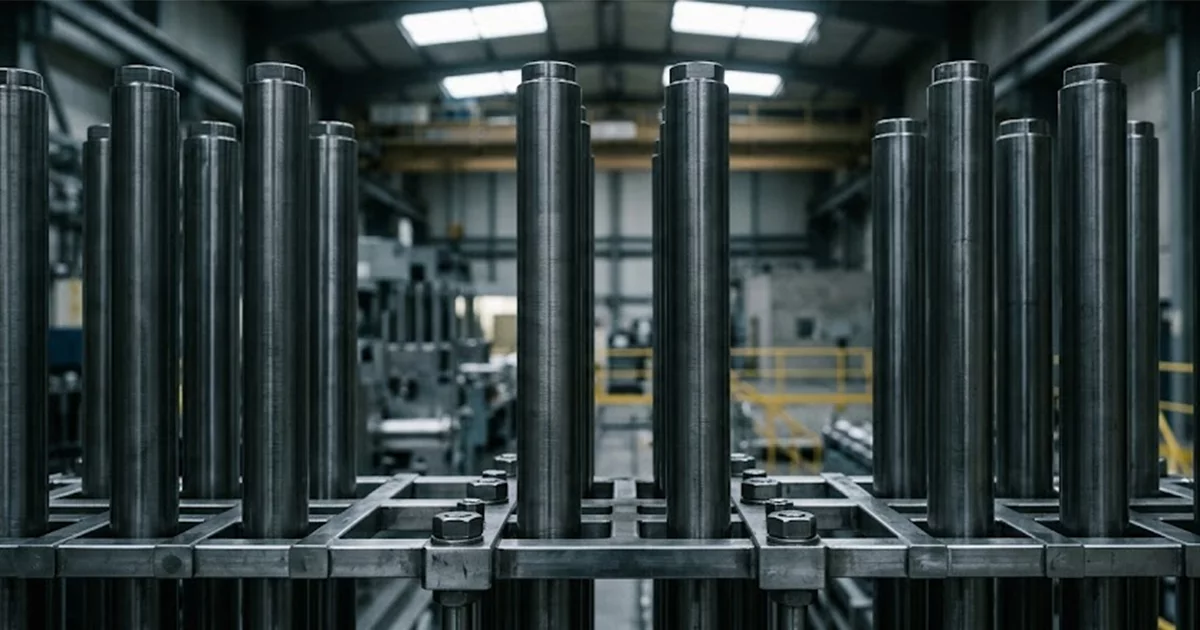
Conventional reactors run on ceramic uranium dioxide fuel, pressed into pellets and stacked inside metal tubes. Lightbridge Fuel is metallic rather than ceramic, a uranium-zirconium alloy extruded into a helically twisted shape. The claimed advantages are better heat transfer, which allows more power from the same reactor core, and longer operating cycles between refueling. The Multi-Zone Fuel Element patent covers varying the composition across different regions of a single fuel element.
The company sells nothing. It has a strategic partnership with Studsvik Scandpower to develop modeling software for metallic fuel, and a framework agreement with Idaho National Laboratory covering irradiation testing. The commercial path runs through loop-test data toward a technology readiness milestone, and then, eventually, toward a utility willing to load an unproven fuel into a reactor.
Lightbridge is headquartered in Reston, Virginia, employs thirteen people, and was known as Thorium Power, Ltd. until it changed its name in September 2009.
Lightbridge Corporation (NASDAQ: LTBR)
Pre-revenue metallic nuclear fuel developer, Reston, Virginia
Cash reserves and net loss per the Lightbridge second quarter 2026 results released August 6, 2026. Share count change, employee count and market data per stockanalysis.com and ChartMill, retrieved September 8, 2026.
The bull case
The balance sheet removes the usual failure mode. Cash reserves of $237.5 million against a first-half net loss of $12.1 million, with no debt, means this company is not going to run out of money in any timeframe that matters. Most pre-revenue technology developers die of funding, not of failed science. Lightbridge has removed that risk entirely, and it can wait for the industry rather than racing a cash clock. Net cash per share stands at $6.74.
The intellectual property is being granted, not just filed. The Japan Patent Office notice of allowance on September 1, 2026 follows a pattern of granted protection across major nuclear jurisdictions. For a company whose entire value outside the cash balance is its fuel design, granted patents in the markets where reactors are actually built are the asset.
The demand backdrop has genuinely changed. Long-term uranium contract prices at a record near $97 per pound, Kazatomprom cutting 2026 output guidance by roughly 10%, and AI data center operators contracting directly for nuclear generation are not sentiment. They are a structural repricing of nuclear economics. A fuel that extracts more power from an existing reactor core is worth more in that world than it was five years ago.
The bear case
- The cash arrived through dilution, not through the business. Shares outstanding rose 72.75% in one year to 35.23 million. That is how a company with no revenue accumulates $237.5 million. An existing holder from a year ago now owns a materially smaller fraction of the same fuel design. Praising the balance sheet without pricing the issuance that built it is reading half the transaction.
- Two decades, no revenue. The company has existed since before its 2009 renaming from Thorium Power, and has generated no product revenue in that period. Trailing earnings per share is negative $0.81. Return on equity is negative 15.39% and return on invested capital negative 11.71%. Duration alone is not disqualifying in nuclear, where development timelines are genuinely long, but it is the base rate a reader should hold in mind against any milestone announcement.
- A patent allowance is not a customer. The commercial path requires irradiation testing, regulatory qualification, and a utility willing to load an unproven fuel into a reactor it cannot afford to shut down. Each of those steps takes years and none has been completed. Thirteen employees are carrying that program, with the physical testing performed by a national laboratory rather than in-house.
- The market is positioned against it. Short interest stands at 4.05 million shares, or 12.31% of shares outstanding. Beta is 2.11, meaning the stock has moved roughly twice as violently as the market. Insiders hold 5.79% and institutions 46.05%, so the register is more institutional than is typical at this size, but a beta above two and short interest in double digits still leave the price sensitive to sentiment rather than to research.
- The risk that cuts against this view: at an enterprise value near $52 million, the market is assigning a modest figure to the fuel program itself once cash is stripped out. If irradiation results support the performance claims and a utility partnership follows, that enterprise value is the whole downside and the optionality is real. A cash-rich developer with granted IP in a repricing sector is not a typical microcap risk profile.
Financial snapshot
Cash against enterprise value
In millions of dollars. Bar length is proportional to value. The two components sum to market capitalization.
Sources: cash reserves per the second quarter 2026 results released August 6, 2026. Market capitalization per stockanalysis.com, September 8, 2026 close. The implied residual is market capitalization less cash, and is the Desk's arithmetic rather than a reported figure. The outlined bar denotes a derived measure.
Shares outstanding, one year change
In millions of shares. The prior-year figure is derived from the reported 72.75% increase.
Source: stockanalysis.com, retrieved September 8, 2026, reporting 35.23 million shares outstanding and a 72.75% increase over one year. The prior-year figure is the Desk's arithmetic from those two disclosures, not a company-reported number.
There is no revenue trend to report. The company has never recorded product revenue. The relevant trend is the relationship between the cash balance and the share count: both have risen sharply over the same twelve months, because one caused the other. A holder evaluating this company is choosing between two readings of that fact. Either the company raised opportunistically into a strong nuclear market and secured a decade of funding on good terms, or it converted a large fraction of existing holders' ownership into a bank balance for a program that has not yet produced a customer. Both readings fit the same disclosures.
Catalysts to watch
- Irradiation loop test data from Idaho National Laboratory. This is the only item on the list that tests whether the fuel performs as designed. Everything else is procedural.
- Any further equity issuance. With $237.5 million already banked against a $12.1 million half-year loss, additional issuance would be difficult to justify on funding grounds and would say something about management's view of the share price.
- A named utility partner. The commercial gap between a national laboratory testing program and a utility loading fuel into a revenue-generating reactor is the gap that matters.
- Third quarter results, expected November 2026. Watch the cash balance against the burn rate and the share count against the prior quarter.
- Short interest. At 12.31% of shares outstanding, a positive test result would meet a crowded position on the other side.
The bottom line
Lightbridge holds $237.5 million against a market value of $289.65 million, owes nothing, burns roughly $12 million a half, and has granted intellectual property in the major nuclear jurisdictions at exactly the moment nuclear economics are repricing. It cannot fail for lack of money, which is how most companies like it fail.
It also has no revenue after two decades, thirteen employees, a share count up 72.75% in a year, and a commercial path that runs through a national laboratory before it reaches a customer. The September 1 patent allowance protects a design that no utility has yet agreed to use.
We label this Neutral. Both halves are unusually strong for a company this size, and they point in opposite directions. The Desk treats the cash as runway, not as value creation, and the patent as protection, not as demand. What to watch is irradiation test data from Idaho National Laboratory, which is the first evidence that would move this beyond a well-funded idea.
Lightbridge Corporation (NASDAQ: LTBR)
Price data as of: September 8, 2026 close, per stockanalysis.com.
Balance sheet data as of: June 30, 2026, per the second quarter 2026 results released August 6, 2026.
Market data per stockanalysis.com and ChartMill, retrieved September 8, 2026. Figures are a point-in-time snapshot as of the dates shown and will change. This is not a valuation opinion, a price target, or a recommendation. Verify against current data before acting on anything in this piece.
Disclosure
This article is independent editorial content and reflects the author's opinion and analysis as of the date of publication. It is not investment advice and should not be relied on as the basis for any investment decision. MicroCap Desk and its contributors received no compensation of any kind — cash, securities, or otherwise — from any company mentioned, or from any third party, in connection with this article. The author holds no position in any security mentioned. Information is drawn from sources believed reliable but is not guaranteed accurate or complete. Microcap securities carry a high risk of loss. Do your own research. See our full Disclosure.