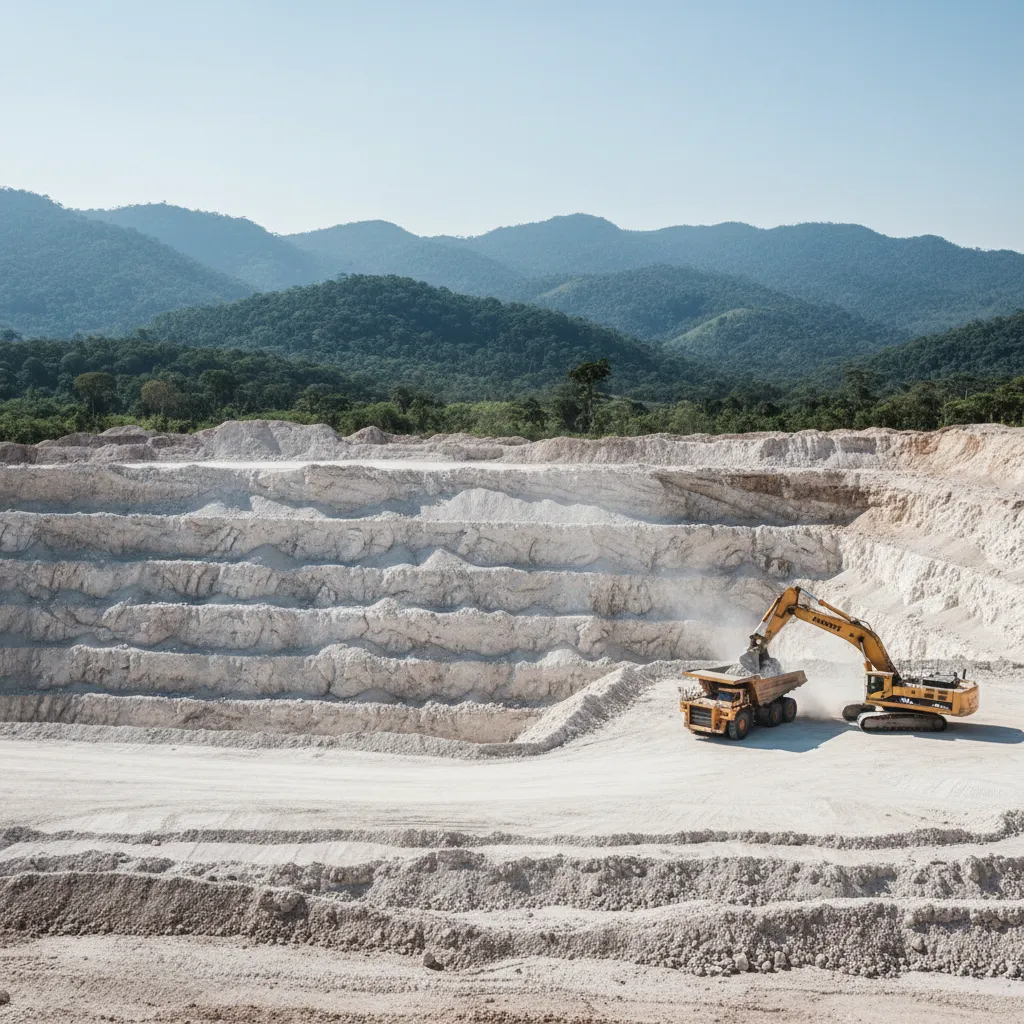
U.S. Energy Corp is a useful reminder that not every corporate pivot requires a rebrand. The public name is still "U.S. Energy." The first line of the business description is still oil and gas production. But the balance-sheet weight and the management-commentary density have both been shifting, quarter by quarter, toward a Montana asset that has nothing to do with barrels and everything to do with helium and carbon capture. April's operational update is the latest data point in that migration.
The honest read is that USEG is now two businesses, roughly one of which justifies the small-cap energy multiple the market is currently applying. The question is whether investors are paying for the legacy upstream business or for the Montana optionality. The answer, for most of the trading range, has been "the upstream" — which is why the stock has not particularly rewarded the strategic shift. That, rather than any operational miss, is what keeps the desk neutral.
The two businesses, side by side
- Small-scale oil and gas production, non-operated primarily
- Cash-flow contribution modest relative to market cap
- Commodity-price exposure without hedge-book sophistication of larger peers
- Decline curve slowly reducing production absent acquisition activity
- No meaningful narrative growth lever from the segment itself
- Helium production at attractive realized pricing versus peer benchmarks
- Co-located CO₂ stream positioned for eventual sequestration / EOR monetization
- 45Q tax-credit eligibility pathway underway
- Single-asset execution risk, but scaled modestly to the corporate balance sheet
- Scarce supply of publicly-traded helium exposure — the ticker itself is a rarity
What the April update added
The April operational note was quieter than the year-end filing, as quarterly updates tend to be, but contained two items worth registering. First, Montana field-level progress continues to match the cadence management has been describing for the last three quarters — site-specific work on flow-testing and offtake negotiations for the helium stream. Second, the legacy upstream produced a quarter broadly in line with expectations, which is to say: stable, small, and unlikely to be the reason anyone owns or sells this stock.
The helium trade is a scarcity trade
Publicly-traded helium exposure is hard to find on U.S. exchanges. Most of the world's helium production runs through either commodity-extraction-adjacent majors or privately-held specialists. A small-cap ticker that actually produces helium, at attractive realized prices, is by itself a rarity that periodically attracts specialist flows. That scarcity value is independent of the underlying commodity cycle; it's a structural feature of where the asset sits in the capital-markets topology.
It's also not the same thing as the stock reprincing for helium exposure over the next twelve months. Specialist flows come and go. The durable rerating, if it happens, needs to come from demonstrated cash flow at the field level — revenue recognition, realized pricing, operating margins — and from a monetization pathway on the co-located CO₂ stream that turns the 45Q optionality into actual tax-credit revenue.
Why neutral, and what would change it
Three things would move the desk off neutral.
- Helium offtake commercialization. A signed, dollar-valued offtake agreement with a specialty-gas counterparty would move field-level progress into revenue-recognition territory. Qualitative progress becomes quantitative on that transition.
- 45Q monetization clarity. The CO₂ sequestration pathway is a real piece of the long-term value case, but requires execution to convert tax-credit eligibility into cash flow. Any concrete step — filed Class VI well permit, signed sequestration services agreement, 45Q credit sale in an IRS-approved secondary market — moves the asset from optionality to valuation input.
- Corporate strategy clarification. A formal decision to deemphasize, divest, or spin the legacy upstream would let the market value the Montana asset on its own merits, which is usually how these stories actually reprice.
The bottom line
USEG is a small-cap energy name that contains a more interesting business than its name or sector categorization suggests. The legacy upstream is not the reason to own the ticker; it's the reason the ticker has underperformed against the segment the Montana asset actually represents. Neutral is the correct read until one of the three catalysts above lands with a date and a dollar sign.
All coverage U.S. EnergyUSEGDisclosure
This article is independent editorial content and reflects the author's opinion and analysis as of the date of publication. It is not investment advice and should not be relied on as the basis for any investment decision. MicroCap Desk and its contributors received no compensation of any kind — cash, securities, or otherwise — from any company mentioned, or from any third party, in connection with this article. The author holds no position in any security mentioned. Information is drawn from sources believed reliable but is not guaranteed accurate or complete. Microcap securities carry a high risk of loss. Do your own research. See our full Disclosure.